Featured
Table of Contents
In 2026, the most effective start-ups use a barbell method for customer acquisition. On one end, they have high-volume, low-intent channels (like social media) that drive awareness at a low cost. On the other end, they have high-intent, high-cost channels (like specialized search or outbound sales) that drive high-value conversions.
The burn multiple is an important KPI that measures how much you are investing to create each brand-new dollar of ARR. A burn several of 1.0 ways you spend $1 to get $1 of new revenue. In 2026, a burn numerous above 2.0 is an instant warning for financiers.
Scalable start-ups often use "Value-Based Rates" rather than "Cost-Plus" designs. If your AI-native platform saves a business $1M in labor costs each year, a $100k yearly subscription is an easy sell, regardless of your internal overhead.
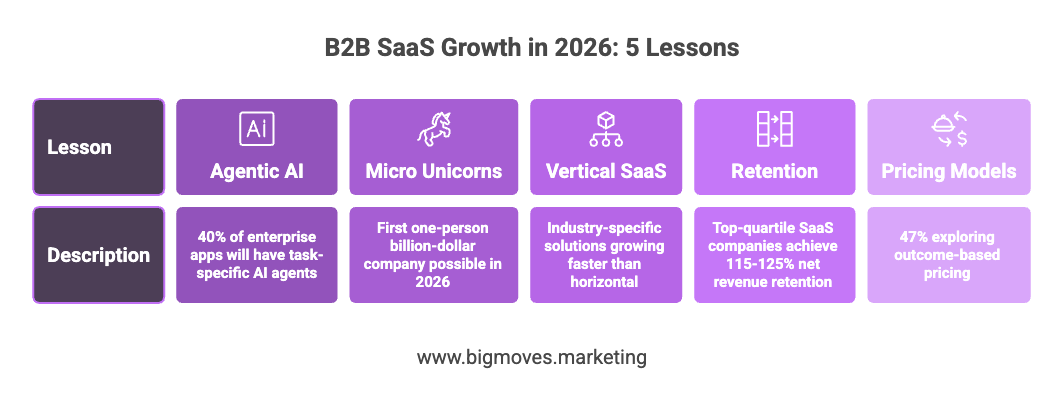
The most scalable company concepts in the AI space are those that move beyond "LLM-wrappers" and build proprietary "Reasoning Moats." This suggests utilizing AI not simply to create text, but to optimize complicated workflows, predict market shifts, and deliver a user experience that would be difficult with conventional software. The rise of agentic AIautonomous systems that can perform complex, multi-step taskshas opened a brand-new frontier for scalability.
From automated procurement to AI-driven job coordination, these agents permit a business to scale its operations without a matching increase in functional complexity. Scalability in AI-native start-ups is often an outcome of the data flywheel effect. As more users engage with the platform, the system gathers more proprietary data, which is then utilized to improve the designs, leading to a much better product, which in turn draws in more users.
Critical Drivers of Scalable B2B Scaling
When assessing AI startup development guides, the data-flywheel is the most cited factor for long-term viability. Inference Benefit: Does your system become more accurate or effective as more data is processed? Workflow Combination: Is the AI embedded in a manner that is important to the user's everyday tasks? Capital Performance: Is your burn numerous under 1.5 while maintaining a high YoY development rate? One of the most common failure points for start-ups is the "Performance Marketing Trap." This occurs when a business depends entirely on paid advertisements to get brand-new users.
Scalable organization concepts prevent this trap by building systemic circulation moats. Product-led development is a method where the product itself serves as the main chauffeur of client acquisition, growth, and retention. When your users become an active part of your product's development and promo, your LTV increases while your CAC drops, creating a powerful economic benefit.
Evolving Operations with Smart Automation
For example, a start-up constructing a specialized app for e-commerce can scale rapidly by partnering with a platform like Shopify. By integrating into an existing environment, you get instant access to a massive audience of prospective consumers, significantly decreasing your time-to-market. Technical scalability is frequently misunderstood as a simply engineering issue.
A scalable technical stack enables you to ship functions faster, preserve high uptime, and minimize the expense of serving each user as you grow. In 2026, the standard for technical scalability is a cloud-native, serverless architecture. This method allows a start-up to pay just for the resources they utilize, ensuring that facilities costs scale perfectly with user need.
For more on this, see our guide on tech stack secrets for scalable platforms. A scalable platform should be developed with "Micro-services" or a modular architecture. This permits different parts of the system to be scaled or upgraded individually without affecting the whole application. While this includes some preliminary complexity, it avoids the "Monolith Collapse" that typically takes place when a start-up tries to pivot or scale a stiff, tradition codebase.
This exceeds simply writing code; it includes automating the screening, deployment, monitoring, and even the "Self-Healing" of the technical environment. When your facilities can immediately discover and fix a failure point before a user ever notifications, you have reached a level of technical maturity that permits genuinely international scale.

Creating Sustainable B2B Models to Convert
A scalable technical structure includes automated "Design Monitoring" and "Constant Fine-Tuning" pipelines that ensure your AI stays accurate and efficient regardless of the volume of requests. By processing data better to the user at the "Edge" of the network, you lower latency and lower the problem on your main cloud servers.
You can not handle what you can not determine. Every scalable company idea should be backed by a clear set of efficiency signs that track both the present health and the future potential of the venture. At Presta, we help creators establish a "Success Control panel" that focuses on the metrics that actually matter for scaling.
By day 60, you ought to be seeing the first signs of Retention Trends and Payback Period Reasoning. By day 90, a scalable startup should have adequate data to show its Core Unit Economics and justify additional financial investment in development. Earnings Development: Target of 100% to 200% YoY for early-stage endeavors.
Enhancing Lead Generation Using Automation Technology
NRR (Net Income Retention): Target of 115%+ for B2B SaaS models. Rule of 50+: Combined growth and margin percentage should surpass 50%. AI Operational Take advantage of: At least 15% of margin enhancement need to be straight attributable to AI automation. Taking a look at the case research studies of business that have actually successfully reached escape speed, a common thread emerges: they all focused on fixing a "Difficult Problem" with a "Simple User Interface." Whether it was FitPass updating a complex Laravel app or Willo constructing a subscription platform for farming, success originated from the ability to scale technical intricacy while maintaining a frictionless customer experience.
The primary differentiator is the "Operating Leverage" of the company design. In a scalable organization, the limited expense of serving each new client decreases as the business grows, resulting in broadening margins and higher profitability. No, many startups are really "Way of life Organizations" or service-oriented models that do not have the structural moats necessary for true scalability.
Scalability needs a particular positioning of technology, economics, and distribution that permits business to grow without being limited by human labor or physical resources. You can verify scalability by carrying out a "System Economics Triage" on your idea. Calculate your forecasted CAC (Consumer Acquisition Expense) and LTV (Life Time Worth). If your LTV is at least 3x your CAC, and your payback period is under 12 months, you have a foundation for scalability.

Latest Posts
How Conversational Queries Affect Local SEO
The Impact of Automation in 2026 Ranking Systems
Aligning Content Goals for Search Experience